The Definitive Guide to
Long Island City Lofts.
A field guide to the one neighborhood in this network where the tenant usually holds the cards — how to tell the factory floors from the glass, where the vacancy actually sits, and how to turn it into free rent.
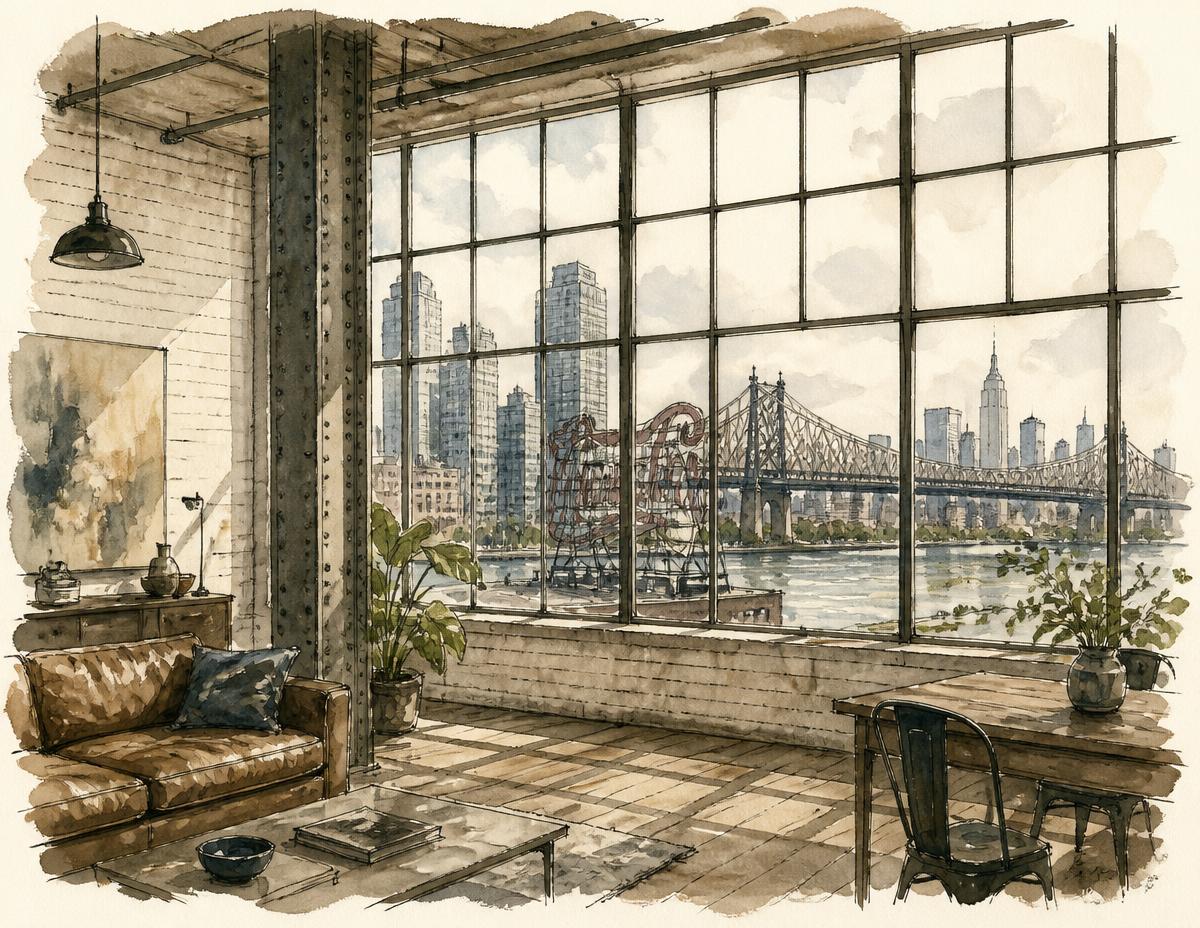
Two markets wearing one name
Long Island City was an actual city — mayor, city hall on Jackson Avenue, twenty-eight years of self-government before it voted into Greater New York in 1898. Then the Queensboro Bridge and Sunnyside Yard arrived within a year of each other and settled what it would be instead: the place where things arrived, got made, and got moved. Sohmer pianos, Brewster auto bodies, Adams gum, Eagle Electric, Silvercup bread. That's the stock we lease.
What makes this neighborhood different from every other one on this list is that a second market grew on top of the first. Since the 2001 rezoning, glass towers have gone up around Court Square and Queens Plaza, and a lot of that space is sitting empty. So you're choosing between converted factory floors with 12-foot ceilings and freight, and Class A tower space with a lobby — often within three blocks of each other, at prices that overlap. Knowing which you actually want is most of the work.
Three kinds of building, three different deals
The converted factory loft. Dutch Kills, the Vernon and Jackson corridors, and the blocks running down toward Newtown Creek. Brick and concrete, factory glazing, 12-foot-plus ceilings, freight, floor loads rated for machinery. Plates commonly 4,000 to 20,000 SF. This is the genuine article and where nearly all of our LIC work happens.
The industrial building toward the creek. Borden Avenue, Review Avenue and the Dutch Kills industrial blocks — docks, drive-in doors, three-phase power, high floor loads, protected industrial land. If you're fabricating, cooking at volume, or running equipment, this is your part of the neighborhood and the rents are the lowest in it.
The Class A tower. Court Square and Queens Plaza. Glass, lobbies, passenger banks, modern systems, no character whatsoever. Worth understanding even if you'd never lease one, because this is where the vacancy is concentrated and it's what sets the ceiling every loft landlord in the neighborhood is negotiating against.
What to check on a Long Island City tour
The concession package, before the rent. This is the neighborhood where that ordering matters. With vacancy running as high as it has around the core, landlords here are giving free rent and improvement dollars rather than dropping face rents. Ask what's on the table in months free and dollars per foot, then model effective rent across the full term. A deal that looks 10 percent more expensive can be materially cheaper once you do.
Which pocket you're in. Dutch Kills and the creek blocks are protected industrial land where machinery, trucks and overnight hours are normal. Hunters Point and Court Square are surrounded by residential towers where none of that is. These are ten minutes apart and the rules could not be more different. Establish it before the LOI.
Power and loading. Ask whether three-phase is available and at what amperage, what the panel has spare, and who pays to upgrade. On loading, ask whether it's a dock, a drive-in or a shared curb cut, get the clear height, and check the truck route — the bridge approaches and the yard cut this neighborhood into pieces that don't connect as directly as the map suggests.
Loss factor. The tower product quotes on loss-factored rentable numbers; a lot of the older loft stock doesn't. Comparing the two without asking is how tenants here mis-price a deal by twenty percent. Get the factor and the usable square footage in writing for every building on your list.
Floor load, if you're bringing anything. Ask for the live-load rating in PSF. The industrial slabs toward the creek carry far more than you'll ever need; some of the converted floors closer to Vernon are lower than tenants assume. Equipment, dense storage, a server room or a library all turn this into the deciding number.
What the block will be in three years. More relevant here than anywhere else we cover. Development is still moving fast through Hunters Point and Court Square. Ask what's approved on the adjacent lots, and if your view or your light matters to you, find out what can legally be built in front of it.
Where the loft floors actually are
Four distinct pockets in a small area, and they behave nothing like each other.
Dutch Kills — the blocks between Queens Plaza and Northern Boulevard. The densest run of converted factory stock in the neighborhood, protected industrial land, real freight and real floor loads. Best value per foot for genuine loft space, and walkable to more subway lines than anywhere else in Queens.
Vernon and Jackson — the older commercial spines. Converted loft floors above street-level retail, the restaurant row, the smaller suites, and the most neighborhood-feeling part of LIC. Right for a studio or an office-style team that wants somewhere to eat lunch.
The creek — Borden, Review and toward Newtown Creek. Docks, drive-in doors, heavy floor loads, fabricators and food producers. Cheapest space in the neighborhood, furthest from a train, and the only stretch where heavy production is genuinely expected.
Court Square and Queens Plaza — the towers. Where the vacancy and the concessions are. Not loft space, but the reason loft landlords three blocks away will negotiate with you.
What tenants ask us about most
“How much is a floor?” Roughly $30–$55 per SF per year, and the spread is the point — older loft and Class B floors have shown averages in the high $20s to mid $30s, while renovated and tower product runs well above. Ask for the loss factor, the electrical service, and what the landlord is offering in free rent and improvement dollars before you compare anything.
“Where is the leverage, and how do I use it?” Vacancy here has run near a third of the market across all classes, concentrated around Court Square and Queens Plaza. Concessions are real and negotiable: months of free rent, improvement allowances, flexibility on term and expansion rights. Get competing proposals in writing, ask for the whole package rather than a lower face rent, and model effective rent over the full term.
“Can I make noise and work late?” In Dutch Kills and toward the creek, yes — protected industrial land, and your neighbors are running production too. Around Hunters Point and Court Square you're beside residential towers and the answer is much more constrained. Establish which pocket your building sits in before the LOI.
“What's the catch?” Character and churn. A lot of what's marketed here is ordinary Class B and glass tower space rather than genuine loft, so you have to filter hard. And the neighborhood is changing fast enough that your view, your block and your neighbors may all be different in three years. In exchange you get the best transit in this network and the most negotiating room.
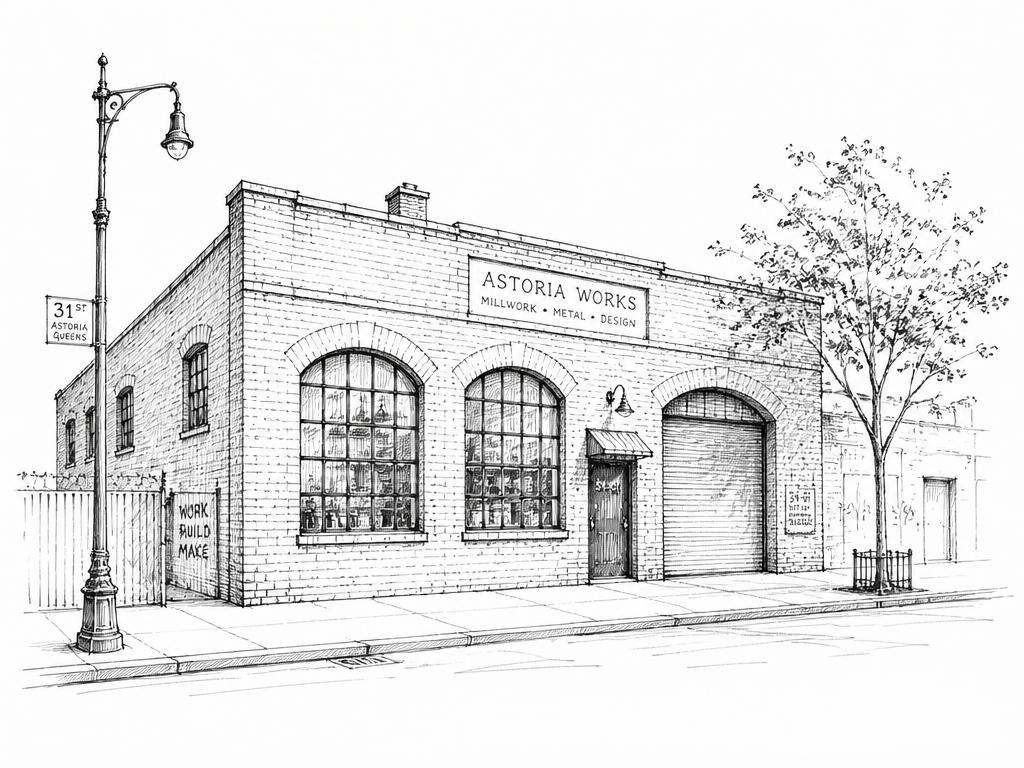
North along the waterfront in Queens: lower brick and timber workshops and mid-century industrial buildings rather than tall factory floors. Smaller plates than Long Island City, quieter blocks, and the N and W a few stops up.
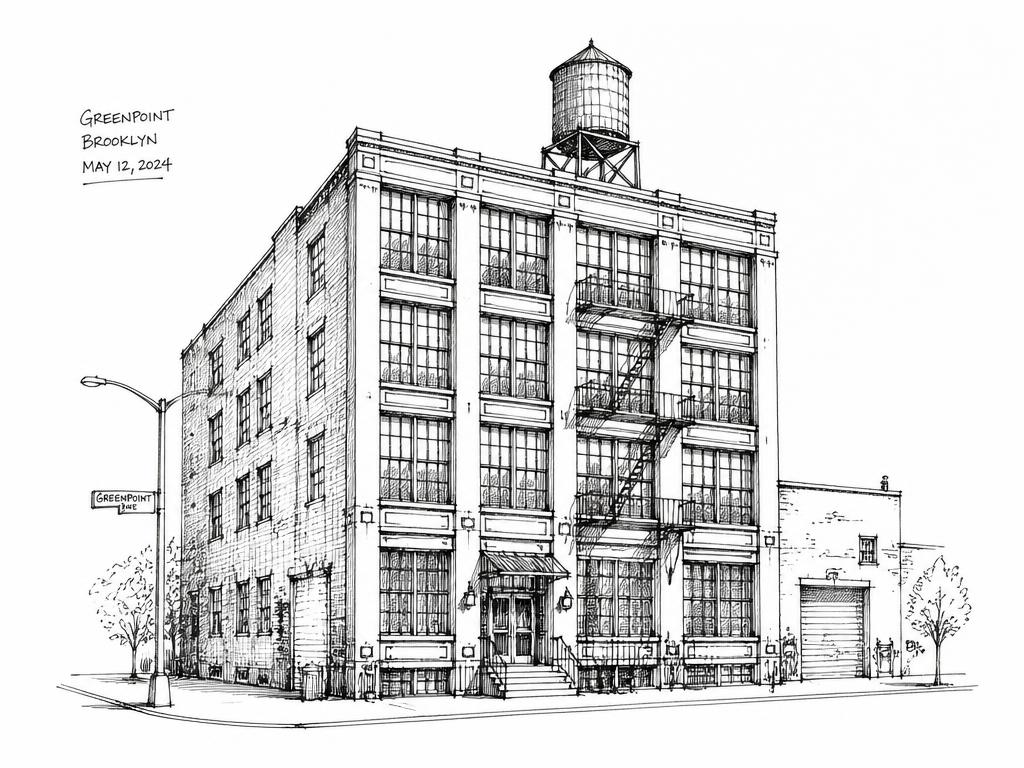
Directly across Newtown Creek in Brooklyn: timber-and-brick manufacturing lofts, sawtooth roofs and low-rise industrial yards. Similar working character to Long Island City's creek blocks, with far less subway coverage.
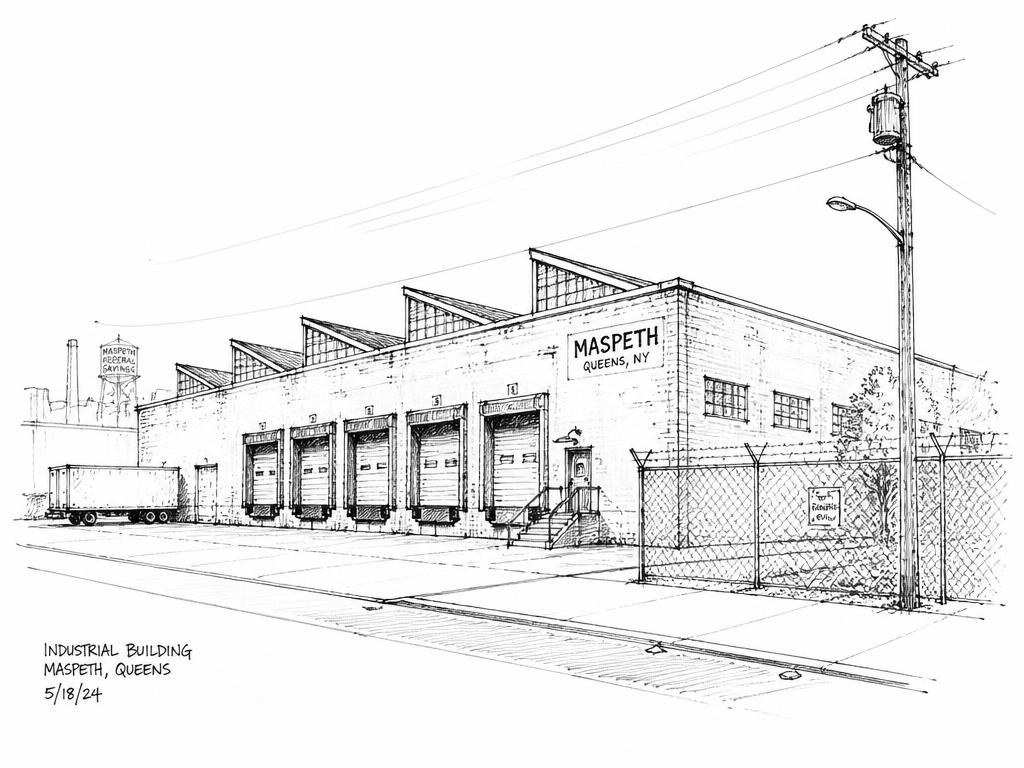
Inland along the creek: single-story warehouses, truck docks and drive-in bays on protected industrial land. It is where the heavier version of Long Island City's Borden and Review Avenue work continues, at ground level.
Tell us what you're after.
Seven quick questions. A person reads it. We keep an eye out — including for floors that never hit a listing site.
Start the Brief →