Long Island City
Loft Space.
Tell us once what you're after — including the floors that never hit the listing sites. A person reads it. That's the whole thing.
Seven questions.
That's the whole thing.
Under two minutes. No account, no login. A person reads every one.
How much room do you need?
Before you tour, hear what to look for.
Structure, submarkets, and the questions worth asking on a walkthrough — including the ones that decide whether a floor works for what you make.
Long Island City Office Loft Negotiation Secrets
A briefing on the two markets, the leverage, and the questions to ask — 5 minutes.
AI-narrated
Read the transcript
Host 1So today on The Deep Dive, we are looking at the commercial office loft market in Long Island City. And you might think you're entering just one big unified neighborhood.
Host 2Right, but you really aren't. I mean, it is actually two completely different real estate markets wearing the exact same name.
Host 1Yeah, and trying to navigate this space without knowing that landscape? It is honestly like stepping into a boxing ring, completely blindfolded. You have older converted factories on one side and then brand new Class A glass towers on the other.
Host 2Exactly. And the thing is, those glass towers with the lobbies and passenger elevators, they actually set the price ceiling for the whole area. So their vacancy creates your room to negotiate.
Host 1Right, because if you can't tell the difference between a genuine converted space and just a standard Class B office dressed up to look like one, you can't tell if a quoted number is a good deal or, you know, completely absurd.
Host 2One hundred percent. To really get why these physical spaces look the way they do, you have to understand what they were originally built to hold.
Host 1The history.
Host 2Yeah, the history. So back in 1870, areas like Ravenswood and Blissville actually incorporated as the City of Long Island City. They ran their own city hall until 1898, when they voted to join Greater New York.
Host 1Wait, so they were their own city?
Host 2Yeah, they kept the name but lost the local government. And then the Queensboro Bridge opened in 1909, followed by Sunnyside Yard in 1910, which, by the way, is still the largest passenger rail yard in the country.
Host 1Oh, wow, I didn't know that.
Host 2Yeah, so between the bridge and the rail yard, it basically settled that this was the place where things arrived, got made, and got moved.
Host 1Which brought in the heavy manufacturing, right?
Host 2Exactly. Places making Sohmer pianos on Vernon, auto bodies, massive industrial bakeries like Silvercup. Nearly all that older stock today was built in that specific window.
Host 1See, here is where it gets really interesting to me. So when a tenant walks in and sees those massive concrete columns, they aren't just for architectural character.
Host 2Oh, definitely not. Those massive floor loads and freight elevators, they were inherited from piano works and bakeries. They were literally engineered to hold up heavy machinery. They were never designed for, you know, typical offices.
Host 1That is wild. And because of that history, LIC is really broken down into three distinct submarkets.
Host 2Right. First, you have Court Square and Queens Plaza. That is all glass towers, tech teams, corporate back office. You get the highest rents there, but also the most vacancy and the most aggressive concessions.
Host 1Okay, and then the second zone?
Host 2That would be down along Vernon, Jackson, and Hunters Point. That is your walkable, converted stock. It is where most of those suites between 800 and 2,500 feet are.
Host 1Right. And then the third one is Dutch Kills and Borden Avenue heading toward Newtown Creek.
Host 2Yeah, which is completely different. That is protected industrial land. You will see metal and wood shops, docks, drive-in access, and three-phase power. It has the lowest rents, but it is the only pocket where heavy use is actually expected.
Host 1So if you are a quiet, creative agency, you probably don't want to be right next to an active metal fabricator.
Host 2Definitely not. An industrial zone dictates your neighbors and their noise levels.
Host 1So knowing all these structural differences, that really dictates the exact questions you must ask on a tour.
Host 2Oh, absolutely. First, you have to ignore the headline rent. You need to ask about the concession package — what are they actually offering in free rent or improvement dollars?
Host 1Because the face rent is basically the least interesting part of a deal here.
Host 2Exactly. And you have to verify the loss factor for the specific floor you are touring, not just the building average.
Host 1Let me jump in there, because loss factor is a killer. That is the difference between the square footage you pay for and what you actually get to walk on.
Host 2Right. In these older buildings, huge freight elevator shafts and common corridors can just eat up so much of the space.
Host 1They really do.
Host 2And you also need to get the floor load limits in writing. Plus, check for clear-to-deck, not bottom-of-duct ceilings.
Host 1Wait, clear-to-deck? Meaning what?
Host 2Well, if a landlord measures to the bottom of the AC ducts, you aren't getting the full height. You need to know the true measurement to the actual roof deck.
Host 1Ah, I see. So what does this all mean for you, the tenant? It basically means filtering out the fake spaces, and you really have to watch out for the churn, right?
Host 2Yeah, churn is huge. Hunters Point was rezoned residential in 2001, and the towers just followed. So the views, the block, your neighbors — it could all be totally different in three years.
Host 1But the upside to all that development is the transit. It is just unmatched. You have the 7 train, the E and the M, the G, the N and the W, the F, plus the LIRR, the LIE, and the BQE.
Host 2Yeah, and because of that transit web and the vacancy in the towers, this is the one neighborhood where the tenant usually has the leverage.
Host 1Which is awesome. Knowing you have leverage is great, but how do you actually find the space? Because a lot of this older stock is family-held and unlisted.
Host 2Yeah, they fill floors by relationship. The real edge is knowing who is quietly offering a year of free rent right now.
Host 1Right, and listeners can just use the short form on our website for this deep dive to access those unlisted matches.
Host 2Which I highly recommend.
Host 1Definitely. Yeah, so when you are finally out there searching for that perfect commercial office loft, know your leverage. But it does leave you with one final thought. When you actually sign that lease, are you paying for the true utility of the space, or just the romanticized ghost of its industrial past?
The East River across to the rail yard, Thirty-sixth Avenue down to Newtown Creek — a city in its own right until 1898, and still the densest concentration of working floors in Queens.
Seven lines, a train and a boat.
The best-connected neighborhood in this network, and it isn't close. For a team commuting from all five boroughs and Long Island, nothing else we cover competes.
- Vernon Blvd–Jackson Av
- Hunters Point Av
- Court Sq
- Queensboro Plaza
Vernon–Jackson to Grand Central is a single stop under the river. Nothing else in this network is close.
- Court Sq
- 21 St
The E and M run express into Midtown; the G is the crosstown to Brooklyn without a Manhattan transfer.
- Queensboro Plaza
- 21 St–Queensbridge
Queensboro Plaza is the cross-platform transfer to the 7 — useful more often than the map suggests.
- Hunterspoint Av
One stop from Penn Station and Grand Central, and the reason teams commuting from Long Island pick this neighborhood.
- Hunters Point South
Midtown East and Wall Street without a transfer, and the pleasant way in from Brooklyn.
The catch is inside the neighborhood, not outside it. Court Square is a hub; the Dutch Kills and Borden Avenue blocks where the industrial floors are can be a genuine fifteen-minute walk from any of it.
It was its own city before it was anyone's neighborhood.
1870 → today
A city of its own
Hunters Point, Ravenswood, Blissville, Dutch Kills and Astoria incorporate as the City of Long Island City, with a mayor and a city hall on Jackson Avenue. It runs itself for twenty-eight years. Almost nobody who works here now realizes the name is literal.
Consolidation
Long Island City votes into Greater New York and becomes part of Queens. It keeps the name and loses the government, and spends the next century as an industrial district that used to be a city — which is roughly how it still behaves.
The bridge and the yard
The Queensboro Bridge opens in 1909 and the Pennsylvania Railroad completes Sunnyside Yard in 1910 — still the largest passenger rail yard in the country. Between them they settle what this place is for: the point where things arrive, get made, and get moved.
What actually got made here
Sohmer pianos on Vernon Boulevard, auto bodies in the Brewster building that later became Rolls-Royce's American operation, Adams chewing gum, Eagle Electric, Sunshine Biscuits and Silvercup bread. Nearly all the loft and factory stock we lease today was put up in this window, for those tenants.
PS1
Alanna Heiss takes over an abandoned public school on 46th Avenue and turns it into studios and exhibition space. It becomes MoMA PS1 in 2000. Artists knew about Long Island City roughly twenty-five years before developers did, which is a pattern you'll recognize from every other neighborhood on this list.
Silvercup
The Silvercup Bakery on 22nd Street shuts down and reopens as Silvercup Studios. The sign stays where it is. Between those stages and the older ones up in Astoria, Queens quietly becomes the production capital of the East Coast without ever announcing it.
The rezoning, and 5 Pointz
Hunters Point is rezoned for residential and the towers start going up. In 2013 the 5 Pointz graffiti building on Jackson Avenue is whitewashed overnight and demolished the year after; the artists later win a federal judgment over its destruction. Both things happened here within a decade, and together they tell you how fast this neighborhood turned over.
A split market, and an opening
Glass towers around Court Square and Queens Plaza carrying real vacancy and real concession packages, and older loft and industrial floors a few blocks away at a fraction of Manhattan rent. That gap is the entire opportunity here. Long Island City is the one neighborhood we cover where the tenant usually has the leverage — provided you know which side of the split you're negotiating on.
Who you'd be sharing the block with.
- Silvercup Studios (22nd St)
- Production offices around Court Square
- Equipment and rental houses along Borden Ave
- Post and edit rooms off Vernon Blvd
- MoMA PS1 (46th Ave)
- SculptureCenter (Purves St)
- Artist studios in the Vernon Blvd buildings
- The Noguchi Museum and Socrates Sculpture Park, just north
- Product teams in the Court Square towers
- Engineering offices near Queens Plaza
- Coworking floors along Jackson Ave
- Startups in the converted loft stock
- Metal and wood shops in the Dutch Kills blocks
- Fabricators along Borden Ave and the creek
- Food producers near Review Ave
- Distribution toward the LIE
- The restaurant row on Vernon Blvd
- Breweries and taprooms off Jackson Ave
- Cafés around Court Square
- The waterfront at Gantry Plaza
- The gantries and the Pepsi-Cola sign
- The Queensboro Bridge
- The ferry landing at Hunters Point
- Sunnyside Yard along the eastern edge
Why bother
The best floors are gone before they're listed. Character space moves through people, not portals — so we do it the other way around. You tell us what you'd love. We keep an eye out.
You told us what you need. That's where it ends.
No newsletter, no CRM queue, no "just checking in." A person reads your brief and reaches out directly when a floor's worth showing you.
- 01
We never sell, share or rent your brief — not to landlords, not to other brokers, not to a data company.
- 02
No newsletters or mass blasts. When we get in touch, it's a direct email or text about a specific space.
- 03
A person reads it. Not a bot, not a queue in some CRM.
- 04
Tell us to stop and we stop. Simple as that.
The Definitive Guide to Long Island City Lofts
The split between the towers and the factory floors, where the concessions actually are, and how to use them.
Long Island City not quite it?
We work the surrounding neighborhoods too. Mention it in the brief.
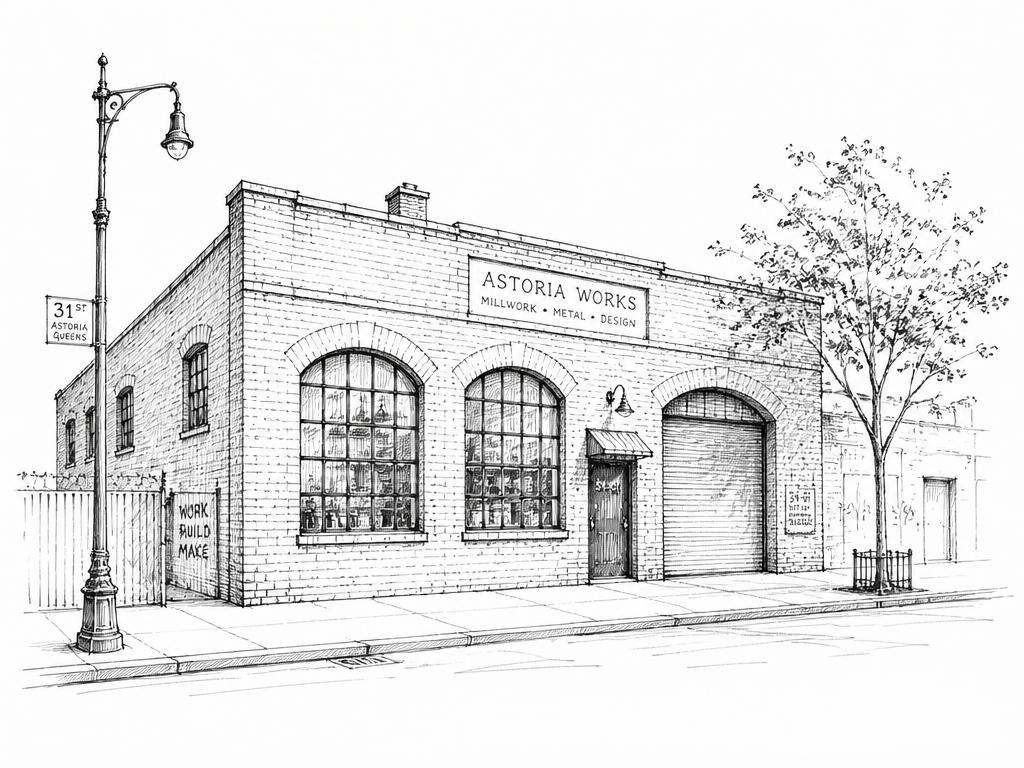
North along the waterfront in Queens: lower brick and timber workshops and mid-century industrial buildings rather than tall factory floors. Smaller plates than Long Island City, quieter blocks, and the N and W a few stops up.
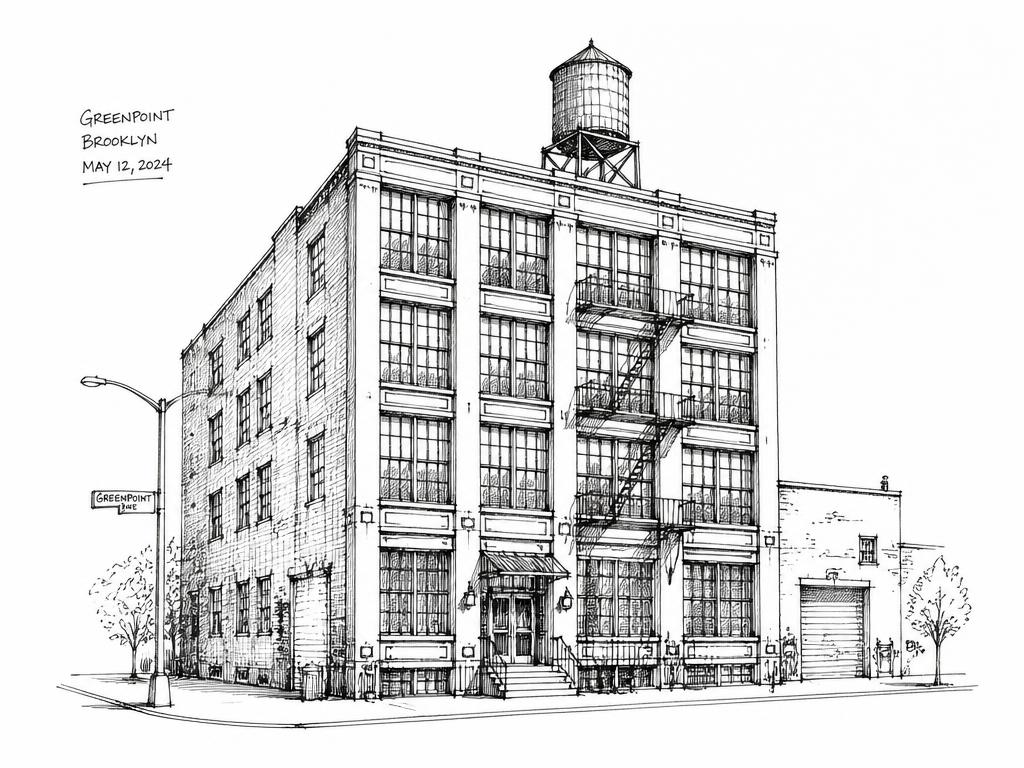
Directly across Newtown Creek in Brooklyn: timber-and-brick manufacturing lofts, sawtooth roofs and low-rise industrial yards. Similar working character to Long Island City's creek blocks, with far less subway coverage.
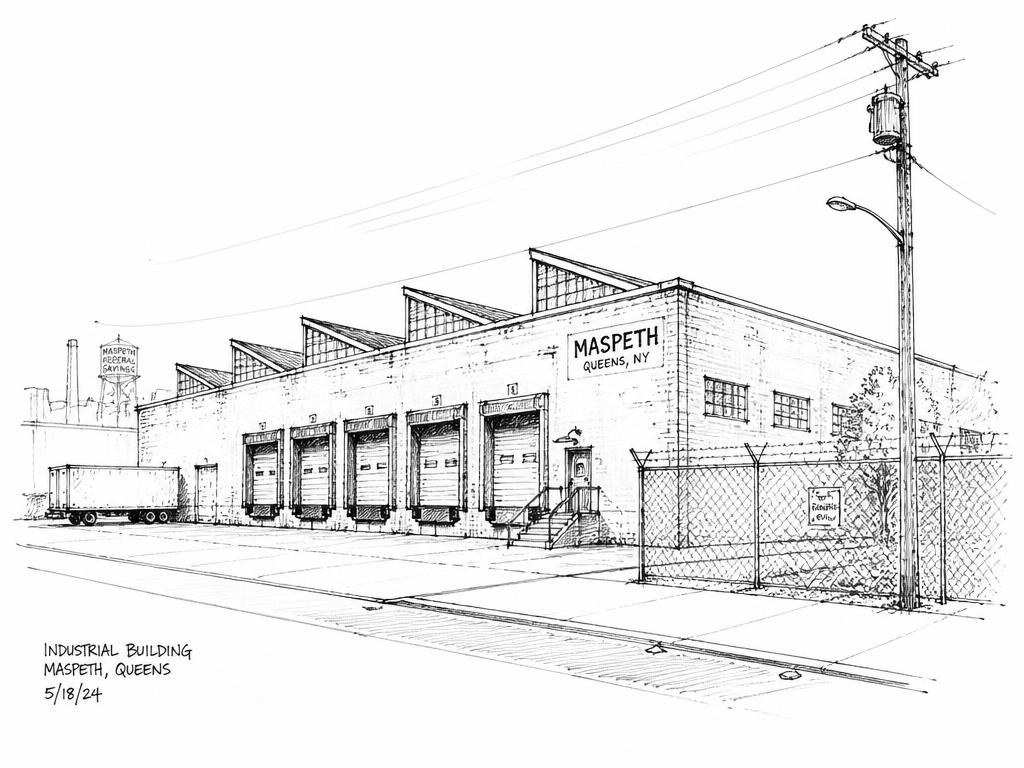
Inland along the creek: single-story warehouses, truck docks and drive-in bays on protected industrial land. It is where the heavier version of Long Island City's Borden and Review Avenue work continues, at ground level.
What people ask before they take a loft in Long Island City.
01What counts as a 'creative office loft' in Long Island City?
02How much does loft space in Long Island City cost?
03Do I actually have negotiating leverage here?
04What's the smallest space I can rent in LIC?
05How do I get to Long Island City?
06Can I do fabrication, food production or light manufacturing here?
07Is Long Island City good for film and production work?
08How is LIC different from Astoria?
09What are the classic Long Island City loft buildings?
10Do you actually have off-market listings?
Got one we didn't cover? Put it in the brief above, or call 646-291-2018.
The words that decide what you're signing.
Every term that turns up on a tour, in a floor plan or in a lease — what it means, why it costs you, and how it behaves in this neighborhood specifically.
- Concession package
The full set of incentives a landlord offers beyond the headline rent — months of free rent, a tenant improvement allowance, flexibility on term or expansion rights.
Why it mattersIn a market with real vacancy, the concession package is often worth more than the quoted rent per square foot — and it's negotiable in a way the headline number often isn't.
In Long Island CityLong Island City is the one neighborhood in this network where a tenant usually has real leverage — reported office vacancy across all classes has run near a third of the market, concentrated around Court Square and Queens Plaza. Ask for the whole package, not just a lower face rent.
- Face rent
The rent figure quoted on a lease before any concessions — free rent months, improvement allowances, or other incentives — are factored in.
Why it mattersIt's the number every listing leads with, and in a concession-heavy market it's frequently the least meaningful figure in the deal.
In Long Island CityWorth treating with real skepticism here specifically. Model the effective rent — the true cost once free rent and any TI allowance are spread over the lease term — before comparing two Long Island City quotes, since the building with the higher face rent sometimes ends up cheaper.
- Class B office
A grading below Class A — older buildings, less amenitized lobbies and systems, without the finishes or infrastructure of a newer or fully renovated tower.
Why it mattersA lot of what gets marketed as loft space here is actually ordinary Class B office dressed up with exposed brick, not a genuine converted factory floor — worth telling the two apart before you tour.
In Long Island CityThis distinction matters more in Long Island City than almost anywhere else we cover, because the neighborhood genuinely contains both a real converted-industrial market and a Class B office market wearing similar marketing language. Ask directly what the building's original use was.
- Loss factor
The percentage difference between a floor's rentable square footage — what you're billed for — and its usable square footage — what you can actually put desks on.
Why it mattersIt's the number that turns a good-looking rent per square foot into a worse deal than it appears, and it varies floor to floor within the same building, not just building to building.
In Long Island CityWorth verifying for the specific floor you're touring rather than trusting a building-wide average — in these older converted buildings, oversized freight elevator shafts and wide common corridors can eat up a genuinely large share of the space on some floors and much less on others.
- Clear-to-deck
The distance from finished floor to the underside of the actual roof deck — true ceiling height, as opposed to a measurement taken to the bottom of ductwork or a drop ceiling.
Why it mattersA landlord measuring to the bottom of the AC ducts is quoting a shorter real ceiling than the number on the flyer suggests.
In Long Island CityWorth asking about explicitly here — LIC's converted factory and warehouse stock often has real height to offer, but confirm the number is measured to the actual deck, not the ductwork, before it factors into your decision.
- Floor load
The weight a floor is rated to carry, in pounds per square foot — live load is what you put on it, dead load is the structure itself.
Why it mattersGet it in writing rather than assuming from the building's history — a floor built to hold a specific kind of heavy machinery a century ago isn't automatically rated for whatever you plan to put on it today.
In Long Island CityLIC's factory and warehouse floors inherited genuinely serious floor loads from what they were built for — piano works on Vernon Boulevard, industrial bakeries like Silvercup, auto body plants. That history is real, but confirm the current verified rating rather than assuming it from the building's past.
- Freight elevator
A separate, larger-capacity elevator built to move goods and equipment rather than people.
Why it mattersWhether one exists, its weight capacity, and where it opens onto your floor all shape whether a space actually works for anything beyond a standard office move-in.
In Long Island CityA genuine feature of LIC's older stock, inherited from the piano, bakery and auto-body tenants the buildings were built for — but confirm capacity and condition directly rather than assuming a converted factory automatically has a working one.
- Protected industrial land
Zoning that reserves an area for manufacturing and industrial use, restricting or preventing residential conversion — as opposed to land that has been or could be rezoned for other uses.
Why it mattersIt's the difference between a neighborhood that could turn over into towers and neighbors in a few years, and one that's built to stay industrial — which matters enormously if noise, hours or heavy use are part of your operation.
In Long Island CityThe Dutch Kills and Borden Avenue blocks toward Newtown Creek sit on land like this, in real contrast to the Hunters Point towers, which followed a 2001 residential rezoning. If you need to run loud or make things, this is the pocket of LIC built to let you.
- Three-phase power
An electrical service delivering power across three alternating current phases rather than the standard single-phase supply — required to run heavier industrial motors and equipment.
Why it mattersIt's not something you can add cheaply after signing; confirm the building actually has it before you count on running fabrication or production equipment.
In Long Island CityGenuinely available in the Dutch Kills and Borden Avenue industrial pocket, where metal and wood shops already operate — not something to assume elsewhere in the neighborhood, including the Vernon and Jackson loft stock.
- Tenant improvement (TI) allowance
A sum of money a landlord contributes toward a tenant's build-out costs — new flooring, walls, systems — usually negotiated as part of the lease.
Why it mattersIt's one of the biggest levers in a concession package, and in a soft market it's genuinely negotiable rather than fixed.
In Long Island CityWorth pushing on directly here, given how much available space Long Island City is carrying right now. Ask for it explicitly rather than accepting whatever a landlord offers first — this is one of the few neighborhoods in the network where that ask has real leverage behind it.
- Submarket
A distinct pricing and character zone within a larger neighborhood, shaped by its own building stock, zoning or tenant mix.
Why it mattersComparing rents or availability across an entire neighborhood can be misleading when the underlying submarkets behave completely differently from each other.
In Long Island CityLIC splits into three genuinely different submarkets — the Class A towers around Court Square and Queens Plaza, the converted loft stock along Vernon, Jackson and Hunters Point, and the protected industrial blocks toward Dutch Kills and Newtown Creek. Know which one you're actually comparing before trusting a neighborhood-wide average.
- Rezoning
A change to a parcel's or district's permitted uses under city zoning law — for example, from manufacturing to residential.
Why it mattersIt's the single biggest driver of how fast a neighborhood's character, rents and building stock can change, sometimes within a few years.
In Long Island CityHunters Point was rezoned for residential use in 2001, and the glass towers followed within a decade — a genuine reason a building's neighbors, views and even its lease structure can look different in three years than they do on your tour today.
- Drive-in access
A ground-level loading configuration allowing a vehicle to pull directly into a building, as opposed to unloading at a raised dock or on the street.
Why it mattersIt's a real operational advantage for any business moving heavy or bulky goods regularly, and it's specific to certain building types rather than something every industrial space has.
In Long Island CityFindable in the Dutch Kills and Borden Avenue pocket toward Newtown Creek, alongside docks and three-phase power — genuinely useful if your work involves regular large deliveries, and worth confirming directly rather than assuming from a listing photo.
You know what to ask now. Tell us what you're after.
Seven questions, no account, nothing to download. A person reads every one — and comes back with floors that match, including the ones that never reach a listing site.
Written from buildings we've actually walked. If something here is wrong, or a term is missing, tell us — we'd rather fix it than have it repeated back to us on a tour.
Got a loft
building here?
We probably know a tenant for it. Quietly.
Let's talk→